Let the most heroic souls question themselves on this point. Every smallest step in the field of free thought, of a life shaped personally, has always had to be fought for with spiritual and bodily tortures: not only the step forward, no! the step itself, movement, change of any kind has needed its innumerable martyrs …
Friedrich Nietzsche, Daybreak §18
In my previous post I talked about a specific kind of groupthink - customary morality. This is an idea from Nietzsche’s philosophy, the idea that people attach moral judgements to all aspects of human life. And often they do this unthinkingly, and so social customs start to dictate how people should think and feel. The customs of a particular group - a family, a community, a society - morph into moral expectations.

Customary morality can and should be questioned. But it is difficult to detect because it is so familiar. Nietzsche calls his detection method ‘philosophising with a hammer.’ He means by this two different things - hammer blows that destroy things but also something more delicate, like using a small hammer as a tuning fork. He imagines customary morality as an idol, a statue. The hammer of his philosophy can come down gently to just touch the idol. This allows him to sound it out, to hear if it is hollow or full, for example.
I think the ‘should’ test is one of the most useful hammer blows we can bring to bear on our moral intuitions. It helps us to detect customary morality. When the word ‘should’ is used, there’s a pretty good chance you’re dealing with a moral or ethical expectation that derives from this groupthink. In fact, it is very difficult, if not impossible, to say anything about how any one person in particular should think and feel. But it happens all the time, and this is customary morality at work.
(Here’s the previous post - it might be helpful to read that one too!)

So what we are trying to do today is to detect customary morality at work in the most elemental areas of life, our basic needs. We have already looked at diet, exercise, rest and entertainment to try to understand how customary morality works there (see above). Today we look at three more basic needs - work and money, altered states, and sex and pleasure.
Lifecraft 101
But first, I want to introduce you to a new idea - the idea of lifecrafting. It is one thing to be able to detect customary morality - to sound out our default moral sentiments with our philosophical hammers. But what next?
Next is lifecrafting. This is what it takes, having detected and rejected customary morality, to create your own life, what Nietzsche calls the ‘life lived personally'. What he means by this is a life that is free from inherited moral sentiments and intuitions, a life that has been deliberately and carefully crafted to suit an individual’s needs.
Think about things that are carefully crafted by hand. A luthier, for example, can make you a bespoke guitar, one suited to your own hands, your own playing style, and the kind of sounds you would like to create. To become a luthier is not easy - it takes years of apprenticeships with other, more experienced luthiers. You have to work with wood, steel, acoustics and electronics. You have to understand how sound works, how strings work, and so on. And you have to make something that not only sounds good but looks beautiful. A guitar is an engineering marvel and a work of art, all at the same time.

To craft a life is a supreme act of human creativity and personal engineering. Think of all the elements. In the first instance, your basic needs, what we are looking at today. But also your emotional life, your relationships, the things you spend your time on, the things you hope to become and to achieve. To craft a life means having expert skill and deep knowledge in all of these areas.
So there are two parts to this philosophical practice. If the first part is about detecting customary morality in order to decide what to keep and what to destroy, then lifecrafting is about creating something to take its place. This is about creating a bespoke life, tailored to your individuality, a life that is both beautiful and functional.
So let’s continue our journey with basic needs, with these two perspectives in mind. How do we detect the customary morality that surrounds them and how do we create a life that is free from this?
Here’s three examples of basic needs and the detective work of hammer philosophy alongside the craftwork of creating a life.
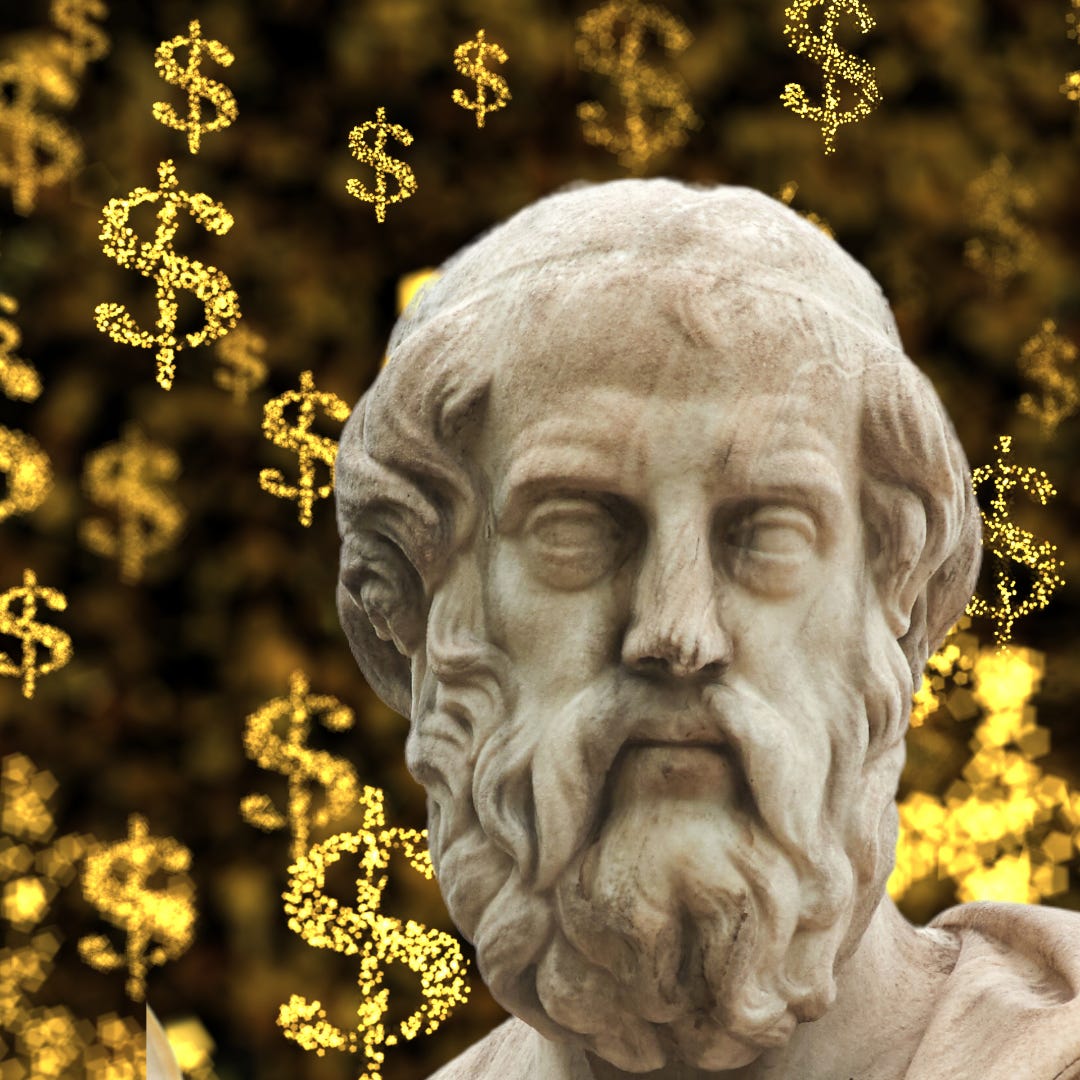
Work and Money