


Beyond the Zero Point
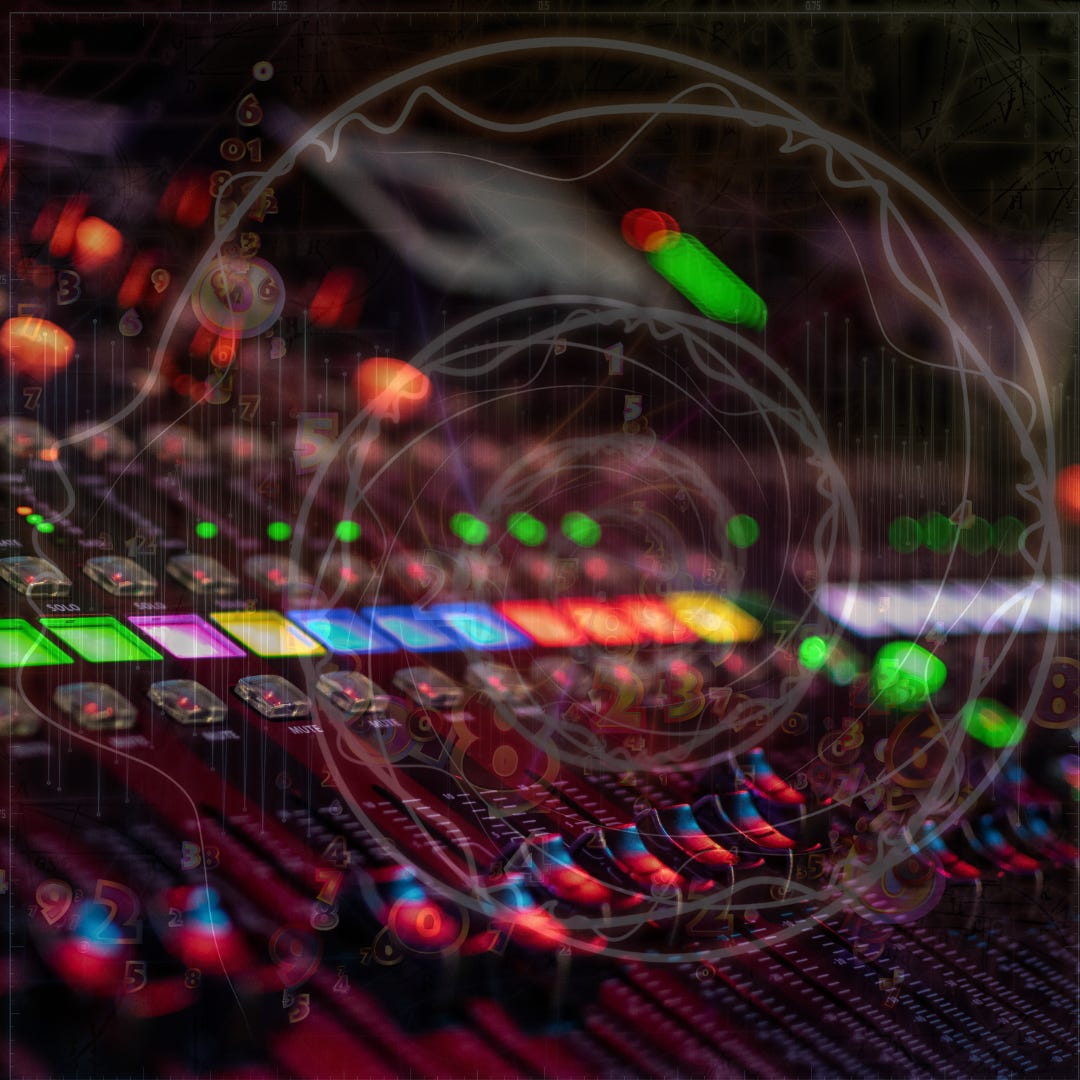
Think of a one of those large mixing desks that recording artists use. There are sliders that move up and down, left and right. Imagine that each of those sliders has a +10 on the top, a zero in the middle, and a -10 at the bottom. And then imagine that each slider has a label, one label per emotion. One is labelled hate/love. Another is labelled respect/contempt. yet another desire/disgust. And so on. The positive side of this emotional dyad is maxed out at +10, the negative at -10. At zero, you feel neither love nor hate, respect nor contempt, desire not disgust.
What is the perfect mix for you?
EQ is an acronym that stands for emotional intelligence in pop psychology, and equalisation in sound engineering. In pop psychology as well as in the mindfulness, meditation and consciousness worlds you often hear talk of practices for inner self-development. One of the goals of many of these practices is to achieve a state of inner peace and harmony, often referred to as balance. A more technical term for this internal state of calm is equanimity. The ancient Greeks called it ataraxia. The idea is to find yourself free from internal turmoil, turbulence and distress.
If we go back to our mixing desk - it is when all of the sliders are set to zero - when we feel no hate, no love, no joy, no despair - just - nothing. In sound engineering you would never set everything to zero. It is equally unlikely that you would set everything to +10 or to -10. The whole point is to find a mix that works. A combination of ups and downs that is aesthetically pleasing.
This seems much more like what we want from our emotional lives than the ideal of a perfect state of balance in which there is no movement, no ups and downs. And this means that we must learn to invite distress, to curate inner turbulence and combine both light and dark emotions to get just the right effects.
This might sound difficult and counterintuitive. So here are two versions of this story - one for the Chaos Crowd (people like me) and one for the Zero Point Crowd (people like my beautiful wife).
When someone from the Zero Point Crowd has a moment to themselves, they aim to restore inner peace and calm. But others - the Chaos Crowd, have a different desire. When given that same opportunity, they will aim to generate internal experiences that cannot be described as peaceful, calming or restorative. My intention here is simply to describe both of these from my perspective.
For the Chaos Crowd
If humankind does not perish of a passion it will perish of a weakness; which do you prefer? This is the main question. Do we desire for humankind an end in fire and light or one in the sand?
Friedrich Nietzsche, Daybreak §429
I think there are many people who simply don’t desire inner peace. I think it is harmful to hold this standard up as the universal goal - and to leave the turbulent and chaotic ones (like myself) with no guidance and even a guilty conscience for ‘failing’ to achieve this very particular goal. While there is a lot of help and support for people searching for inner peace, there is little help for those that want to curate inner intensity.
For these people, turbulent and even distressing states can be desirable. These people look for ways to shake themselves out of the state of peace. For these wonderful folks inner calm is a kind of stupor, a numbing of the senses, even a rejection of life. To feel nothing - to have all the dials set to zero - is a kind of death. Even to attempt to step outside the experience and observe it is to destroy it. For people like this - like myself - the desire for inner bliss is the expression of nihilism.
You see this acted out in many ways. Whether it’s the thrill of a roller coaster or of base-jumping, or the daring of sexual experimentation, or diving into altered states using (often illicit) substances, or going to an art gallery, or watching a horror film, or reading sad poetry, or teasing a sibling - there are just so many things that we do in life to wake ourselves up, to disturb ourselves.
So let’s set up an alternative narrative and develop alternative practices for these types, for the chaos crowd. Let’s normalise inner chaos, emotional turbulence, and even psychological distress.
I have two things I do in this regard. The first is musical - I love to listen to heavy music. I have come to understand that I like the feelings of disgust and rage that it evokes. It is part of my mindfulness practice now - to listen to extreme, aggressive and evil music - and to just let it take me away.
Another practice I am playing around with is the idea of a medit(hate)ion. A self-guided meditation in which I deliberately evoke my darkest self - I dwell on the dark emotions of hatred, contempt, disgust, fear and rage. I take long imaginative journeys into these dark caves, I call them my obsidian wells.
It is wonderful. I encourage you to try it out.
For the Zero Point Crowd
If you want eventually to deprive the best things and situations of all their worth, then keep talking about them the way you have been! Place them at the top of your morality and talk from morning till night about the bliss of happiness, the tranquillity of the soul, about justice and immanent retribution — the way you carry on, all these good things will finally attain a popularity and street-clamour of their own, but at the same time all the gold that was on them will have worn off through handling, and all the gold inside will have turned to lead.
Friedrich Nietzsche, The Gay Science §292
