


Hostile Instincts

Nature neglected them [the moralists] - it forgot to give them a modest dowry of respectable, decent, cleanly instincts.
Nietzsche, The Anti-Christ, §57
When I think about instincts I usually think about something primal that helps an animal (including the human animal) to survive. Instincts are a response to a situation that allows an animal to escape, to feed, to mate and so on.
Instincts seem to be relatively fixed. Generally speaking, we think of instincts as an evolutionary feature. Behaviours that support survival are reinforced and those that don’t are weeded out. The result: the animals that remain are those with finely tuned instincts for survival.
But humans want more than survival. We want to flourish, to live our best lives, to be the ultimate version of ourselves. For us instincts are relevant to flourishing as well as to mere survival.
Now imagine a situation where a person’s instincts are perfectly tuned to ensure survival and to guarantee flourishing. In this case, the answer to one of humanity’s deepest questions - how to flourish - is easily solved. The answer for this person is simply to trust their instincts.
But it is not obvious that our instinctive responses are always the best ones. Sometimes they are more appropriate to our ancient past than to our present situation.
Nietzsche takes this a step further. Forget “inappropriate.” He suggests that it’s possible to have instincts that specifically work against flourishing, or even worse, survival. What if we have hostile instincts, instincts that are hostile toward us, that work directly against us?
First I’ll look at what where hostile instincts might come from and second I’ll look at what to do about them.
Morality and Instinct
Morality is herd-instinct in the individual.
Nietzsche, The Gay Science, §116
Customary morality is the set of beliefs, social rituals and behaviours that we absorb from our culture. Over time, moral norms become so assimilated into our social worlds that we can hardly see them. We start to think that this is not just a moral norm. We start to think that this is the way the world actually is. At the point where a moral norm becomes invisible, I think it is fair to say it has become instinctive.
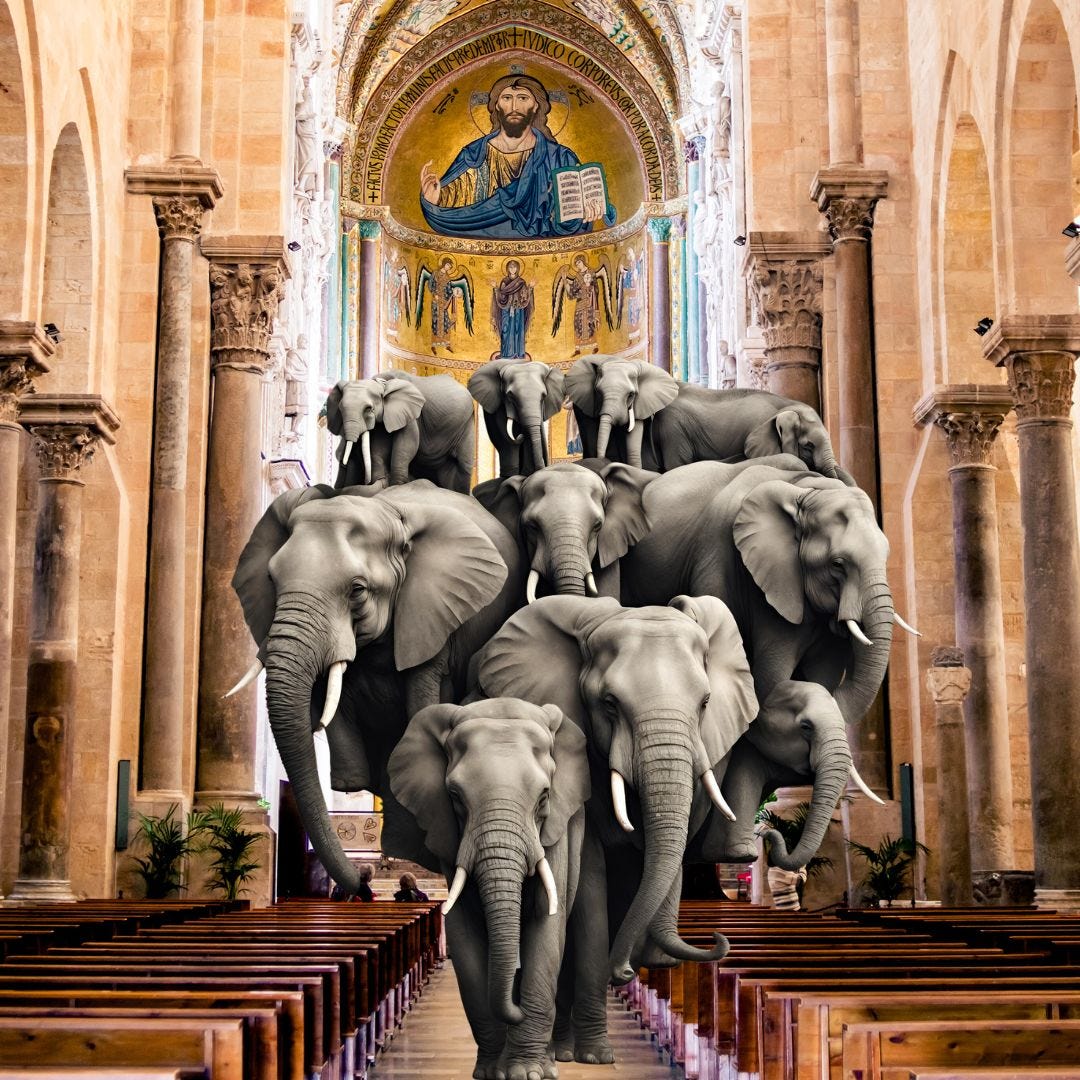
Nietzsche thought the moral norms of his day, derived from Christianity, had turned into hostile instincts. In his book The Anti-Christ, he talks about how generations had been ‘bred’ to turn against life, to reject it. To hate everything lively, boisterous, flamboyant. Everything different, unique and new. Everything transgressive.
But, for him, life is flamboyant, experimental, adaptive and abundant expression.
For Nietzsche, any attempt to fit this wild diversity of expression into the confines of a single ideal is hostile to life. When a singular moral ideal becomes instinct, when morality no longer tolerates the diversity of expression that nature itself produces - then morality itself has turned into a hostile instinct.
“Should” you?

The instinct of ressentiment said no to everything on earth that represented the ascending movement of life: success, power, beauty, self-affirmation; but it could do this only by becoming ingenious and inventing another world, a world that viewed affirmation of life as evil.
Nietzsche, The Anti-Christ §24
